Showing posts with label change. Show all posts

Wednesday, January 02, 2013

 
Like so many thoroughbreds exploding onto the track at Churchill Downs, the gates have burst wide and the race to resolutions has begun. “Here we go again!” was first out but is already off the pace. “This Time It’ll Be Different” is fading quickly, but, the across the board favorite “Throw in the Towel” is once again moving up rapidly on the inside.

Alas, ‘tis January, and we have entered the silly season.

exercise motivationBarely two weeks ago, it was difficult to find a parking space at the mall — but no longer. Rather, it’s simpler than locating one at the health club. TV ads no longer tempt with sugary visions of chocolaty treats, opting to substitute video of hard-bodied men and bikini-clad women sweating to the latest exercise DVD available for three easy payments of $19.95. Interviews with specialists pontificating on the best value in gym memberships have supplanted chefs who provided recipes for holiday goodies. Store windows are now chock-a-block bloated with displays of diet pills, quick smoking solutions, and self-help books.

If you, like me, grow weary at this annual festival of advice; fret not, as it’ll be as long gone as last year’s chocolate Hanukkah gelt come Valentine’s Day. My question is, since it never works, “Why do we keep doing it?”

Oh sure, we’re a pretty self-critical bunch; never totally content with our lot in life. Lose a few pounds, get fit, spend more time with the family, work less, earn more, tuck this, grow that… it’s a never-ending catalog of imperfections. Yet, we can work on those any time. Why don’t we? Instead, every January, on the heels of two months of hedonistic over-indulgence, we stop for a moment to take self-inventory. After getting past the depression that follows such an unhappy assessment, we courageously commit to change every single solitary individual behavior that makes us feel sad or look bad. Within weeks — sometimes merely days — we’re exhausted by too much change in too short of a time, gorge on Valentine’s candy, and give up, proclaiming, “There’s always next year.”

Ready to break the cycle? It’s much simpler than expected.

As a New Year’s public service, I present a four-step-plan to a happier you.

  1. Now is the time, whenever “now” is. When the spirit moves you, don’t wait; not until next Monday, next month, or even until tomorrow. When the desire to change hits is when we’re most inspired — and it might not last. Don’t waste that opportunity.
  2. The larger the commitment (call it a “resolution” if you absolutely must), the more support necessary. Not only are you altering your own behaviors — but you’re forcing those around you to change how they interact with you. Recognize that, as well as their feelings in this process. Tell them what you want to do – and build support. Oh yeah, it’s also good to remind yourself that if you could do it on your own, you already would have.
  3. The simpler the change, the more likely its success. For example, if your goal is to exercise more, it makes more sense to promise you’ll walk a block every day — and really do it — then it does to swear you’re going to run a mile, but never get around to it.
  4. Setbacks are not failures. The process of change is a few steps forward interspersed with several stumbles. Like anything else you’ve mastered (career, relationships, skills), it’s not linear upward growth. You’ll fall down; count on it. Ask yourself what tripped you up, and then repeat steps one to three as necessary with overcoming that as your next goal.
About the author: Scott “Q” Marcus is the CRP (Chief Recovering Perfectionist) of www.ThisTimeIMeanIt.com, a website to support folks frustrated with making promises and ready to make a change in a supportive environment. Sign up for his free newsletter at the site or at facebook.com/thistimeimeanit. Enjoy and share his playful TEDx talk, “Finding Happiness as an Imperfect Being” at http://bit.ly/ScottsTEDx
     

Wednesday, February 08, 2012

Keeping Track: Using a Journal or Diary to Lose Wegith

When my children were young, I registered their growth on the hallway doorjamb with pencil marks and knife notches.Next to each was inscribed a date and name. Since those statistics are most likely meaningless to the latter owners, I assume sandpaper and lacquer have removed that chronicle; yet I wonder if they left those markings intact, pondering periodically where went “Daniel, January 28, 1988” or “Brandon, April 7, 1989.”

Numbers are the language by which lives are recorded; history is kept; and even how the universe communicates. This does not denigrate the clout of intuition, emotion, nor hunches; yet, the bottom line — quite literally — is what the numbers say. Whether checking the weight of a newborn; success of a business; leadership of a country; or the future of our planet; it’s “in the numbers.”

Our language is strewn with numeric references. We hope no one “does a number on us,” or that our “number is up.” We “dress to the nines” for elegant receptions, but refrain from becoming “three sheets to the wind.” There are “no two ways about it;” numbers count (um, pardon the pun).

It therefore stands to reason that that which we monitor expands our awareness, affording concern or confidence. So logically, if we want to change something about us, we must establish a baseline and “keep score.”

This process starts before we can count, as illustrated by how the amount of gold stars on a refrigerator can be extremely effective in fine-tuning a child’s behavior. As adults, step one in altering our lifestyles might involve tracking our accumulation of wealth (or lack thereof), or when we anticipate joyful occasions, “counting the days.”

Of course, that means should better health be the objective, we must track the behaviors associated with those goals. A smoker can become an ex-smoker by paying attention to how often he lights up and setting targets to lower that count over time. If physical fitness is the desired outcome, we can write down how often — or how far — we walk or run. We record our blood pressure. We check our weight. We can even monitor our attitude.

All this has been a preamble to one question: “If we agree that keeping track can make our lives better, why don’t we do it more often?” What’s the resistance?

Wednesday, November 09, 2011

Who is more stubborn - cats or us?

My wife, Mary Ann, is one of the most nurturing individuals you will ever have the pleasure to meet. She is also a passionate advocate for animals. More specifically, one might refer to her as “one of those cat ladies.” I personally would not do that as the result would be that I would spend my evenings in solitary. (Of course, she would spend the night-time with our cats, proving my point. Yet, I think the irony would be wasted on her.)

The Orange Boys

We had three cats.

Sadly, “K.C.,” the elderly matriarch passed away early this year, leaving the two identical ginger cats, “Tiger” and “Motor.” (Let’s be clear; I did not choose their names, okay?) These “orange boys” are “inside cats,” because our vet said that the best way to ensure your kitties lead a long, healthy, purr-fect life is to not them prowl the streets. As nimble and agile as felines might be, they don’t understand the concept of automobiles.

Within our fenced backyard dwells a third, Birman, cat. She (we think she’s a “she” but we’re not sure) unexpectedly appeared six years ago, and although she has departed for short periods, she always returns. Exhibiting no fear of us, she’s incredibly affectionate, so we think she was abandoned. Due to her silky, strikingly beautiful, long, silver, and black fur, we call her “Smokey.” (I wanted “Velvet” but was over-ruled.)

Since K.C. passed, my wife has wanted to integrate Smokey with the orange boys, especially as the weather turns harsh. Last weekend, she was finally able to convince Smokey to come inside. To help her feel safe (as well as let the other animals acclimate) Smokey stayed in an unused upstairs bedroom, replete with bed, food, water, litter box, and a screened — but slightly open — window, allowing her the ability to survey the neighborhood from on high. After Smokey was given the good-health go-ahead by the vet, we would begin the process of assimilation.


Until the appointment, my wife checked on her regularly, refreshed her needs, and — in general — kept her company. All was proceeding according to plan until yesterday morning. Upon entering Smokey’s room, she discovered a Smokey-sized hole torn in our screen. During the previous night, Smokey pulled a Steve McQueen and escaped back to the “wild,” only to return to our backyard later in the day as smug as if nothing had happened. She was as affectionate as ever, and despite rejecting the four-star hospitality we had so graciously provided, was only interested in her standard nightly canned food repast.

“Why would Smokey prefer to live in the rain and cold instead of in a warm house?” my wife wondered.

“It doesn’t make sense to me,” I granted. “However, if you look at it from her point of view, outside is all she knows. Frosty nights and wet grounds might not be pleasant, and she’d probably even enjoy being inside once she got used to it, but sometimes you stay with the discomfort you know rather than take the time to learn about something better.”

I’m not a cat; that’s probably evident. But, at least in that respect, humans are not that far removed. How often do we pass up the option for “better,” obstinately remaining with “same?” Even after accepting things can be better, we still have to shake up long-held behaviors, and usually, we decide it’s not worth the effort. So, on we plod…

With enough tuna to keep her belly full, and a warm fireplace by which she can lay, Smokey might have made the switch. We, on the other hand, can be a lot more stubborn.

Wednesday, August 24, 2011

Working Hard at Relaxing

I’m not dead.

At least when I wrote that; I wasn’t. Being the intelligent reader of this column, you put two and two together and surmised that in a flash. Hopefully, as you read this, I am still in the not-dead state of being — and shall remain so for decades yet to come.

Having proven therefore that I understand very little about what it’s like to die, you will cut me slack about not really knowing — but safely assuming — that no one’s last words were ever, “I wish I would have spent more time working and less time enjoying life.”

We would agree, wouldn’t we?

So, then what’s the deal with non-stop, dawn-to-dusk, 24/7, busy-making? We don’t ever just “chill.” Well, at least I don’t; maybe you do, but I’ll bet dollars to donuts that you’re in the same place. There’s so much to get done with so few hours to do it.

Forty-hour workweek; what’s that? Wake up. Shower. Shave. Throw some frozen waffles down your gullet while checking the mail and packing lunches. Get the kids to school, pick them up, and beat feet to soccer practice and gymnastics. Straightaway back, homework, meals, brush teeth, and off to bed. To accomplish everything requires groundwork: grocery and clothes shopping, housecleaning, home maintenance, and car servicing. These necessitate steady income — and, oh yes — have you heard the news about the economy? You better not slack off at work or they’ll swap you out quicker than a DVD rental on a Saturday night. So, off to the salt mines, bringing our assignments home so we can get them on our kitchen tables in the morning and the bed stands at night. We’re work harder while having the privilege of paying more for everything. Come end of day, it’s drop like a lead brick off a six-foot wall.

It’s no wonder we don’t have time for “a life.” Or do we?

My sister phones, “What are you up to?” She asks.

I reply, “I’m working hard at relaxing.”

Stop the clock. Re-read that response please: “I’m working hard at relaxing.” Huh? That statement makes as much sense as “same difference,” or “kosher ham;” but I swear it was my reply and I’m betting you relate. Our lives are so cluttered, that if tasks were boxes, we’d be featured on the TV series “Hoarders.” No longer are we human beings, we have become “human doings.”

Last Saturday, you know what I did? I could have worked on my computer, or mowed the lawn. Goodness know, there were bills aplenty requiring my attention. Nope, didn’t do any of those. Instead, I made a conscious decision to do nothing.

It didn’t start that way. My dog, Jack, and I went for a walk. Upon returning, he scampered into the backyard, rolled about on his back, feet to the sky; and then did what animals do so well: Absolutely nothing. Zero. He simply “was.”

I couldn’t remember the last time I did that, so — not having a better plan — I joined him! I didn’t put my feet in the air, but I honest-to-God did lie down in the grass and watched cloud animals pass over my head. I felt the sun on my skin. I let my mind go where it went. For a short time, Jack and I simply appreciated that we exist.

Even machines have an off switch. Surely we deserve as much as do they. The world’s going to keep on turning, even if you’re not the one who’s pushing. Take a moment and recharge. You’ll get more done later.

About the author: Scott “Q” Marcus is a professional speaker and the CRP of www.ThisTimeIMeanIt.com, a website for people and organizations who are frustrated with making promises and are ready to make a change. Sign up for his free newsletter at the site or friend him at facebook.com/thistimeimeanit. He is also available for coaching and speaking engagements at 707.442.6243 or scottq@scottqmarcus.com.

Wednesday, July 27, 2011

Can We Be Social Without Going Out to Eat?

I hadn’t seen him in years even though we live in the same town. You know how it is, I’m busy, so is he. Time got away from us. It’s not like we had a disagreement, or we didn’t want to see each other; it’s just that, well, life kicked in…

I answered the phone, “Hey Scott,” says he, “I just realized that we haven’t gotten together in a long time and we’ve got so much to catch up on. I thought we could schedule a time.”

"Sounds great,” I replied, “I can do lunch next Thursday. If that doesn’t work, we could get coffee in the afternoon, or, on Wednesday, we could meet early and grab a bagel. Where would you like to go?”

He responded, “You know the park with the duck pond?”

“Yes, the one with all the trails?”

“Yeah, that one. What about Thursday at noon?”

“Sure, that works for me. But I’m not familiar with any restaurants there.”

“There aren’t any. I’ve been trying to get in shape, and I know you’re always watching your weight, so I thought we could walk and talk. It would be nice to catch up outside.”

And so we did. But, can I be honest? It felt really weird; kind of like wearing someone else’s clothes. It seems normal enough at first glance, but you just can’t get comfortable.

I mean, think about it, what’s one of the first questions we ask when we decide to meet up with someone: Lunch or coffee? If you really wanted to crash our economy, ban meetings in restaurants or coffee houses.

I’m sure it goes back to primitive times. It’s conceivable (at least to me) that early Australopithecines at day’s end gathered around a half-devoured gazelle and discussed their events on the plains. After all, a leisurely grunting session with some close hominoids after a long period gathering, scavenging, and escaping from carnivores would be welcome.

Although the evolutionary train has pulled out, our habits have not. We celebrate with food. We do business over dinner. Relationships begin — and end — at restaurants. Even our last tribute, the wake, is deeply intertwined with eating.

There’s nothing wrong with these; don’t get me wrong. But one has to admit, that for most of us, it’s hard to picture doing anything else with each other. If we’re looking to adjust our collective waistlines and get in shape, maybe we need to examine some options. After all, there are book clubs, quilting circles, or even video games.

My son was in town; this usually involves copious amounts of food. Under the television lies our unused video console; the wireless type specializing in sporting events, where one creates icons to compete against each other.

Said he to me, “Bet I can take you in a sword fight."

I might be 30 years his senior but I still have testosterone; I couldn’t let that stand.

Our characters faced each other. The battle was joined. After several close rounds, lots of laughter, a great deal of sweat, and exclamations of “You’re toast!” or “Take that,” age indeed triumphed over youth.

More important, I can already tell it will be one of my favorite memories, far more than yet another trip to yet another restaurant. Plus the added bonus is I got to show him he’d still better not mess with his old man. (Of course, I still can’t lift my arms; but I’ll deny it if you tell him.)

About the author: Scott “Q” Marcus is a professional speaker and the CDO of www.ThisTimeIMeanIt.com, a website for people and organizations who are frustrated with making promises and are ready to make a change. Sign up for his free newsletter at the site or friend him at facebook.com/thistimeimeanit. He is also available for coaching and speaking engagements at 707.442.6243 or scottq@scottqmarcus.com.

Wednesday, June 22, 2011

The New Normal: Our Economy Will NEVER Return to What it was - and What to do About That

I’ve had a revelation.

Since the “great recession” of 2008 (which appears to still be in process) came trampling through our economic landscape, I have been — like so many others — waiting and hoping for the rebuilding. When will things get back to how they were? Can we soon return to easier times of job security and stable wages? My ship is weary of white caps; I long to navigate calm seas. When can we be there?

While pondering such issues, it fell hard on me, like a load of gold bricks sold on many radio talk shows as a “hedge against hard times.” The economy — and our lifestyle — will NEVER return to how it was. The “good old days” (such as they were) are in the rear view mirror and we have no reverse gear. We cannot turn around and they will not come back.

That's an upsetting — some might say "terrifying" — concept. Never again will we be able to conduct our lives and businesses like we did “back then.” What we are now experiencing is — and will continue to be — the “New Normal.” Until our last days, and those of our grandchildren, “different” will be “ordinary.” Future generations will study the heyday of the 1990s and early 2000s much the same as we picture the gay 1890s or the early 1920s; wild, excessive, booming — and only imaginable as images in history books.

I don’t mean to be a downer, but it’s time we bow to an ever-apparent reality and accept facts for what they are, not what we long for them to be. Denying the obvious delays the inevitable, which furthers great hurt and denigrates our lives. Striving to maintain an illusory status quo by rejecting reality prolongs its effects; and makes worse the pain.

Having said that, I do pride myself on being positive, while understanding that the set up of this column might appear less than optimistic. Yet, it can be. Due to this unhappy situation in which we find ourselves mired, we are becoming more resourceful, better planning our expenses, accepting gratification in that which we took for granted previously, and we are contributing more to our local communities.

These are wonderful changes. Many considered getting “more involved in our communities” or “cutting back on frivolous spending” numerous times before. However, until now, the pressure was not convincing enough to force action. “One of these days…” has arrived. It is today.

Significant change is always born of fear, force, or pain. No one gets up one morning, totally content with life, and says, "Let me see how I can change it.” Rather, when circumstances become too uncomfortable, we decide to do something different. The great recession has inflicted much fear and great pain, and has forced upon us harsh change. Although things will never be as they were, we overlook that they can be better. We will have tools and techniques never before considered. We will at some point re-establish equilibrium. Our world will forever be altered; yet it will also be unique with a new set of advantages and benefits; unknown to us today, but surely waiting over the horizon.

The quicker we accept that there is no turning back, the speedier we will face the future — and the faster we will experience these new advantages.

Some might disagree with my analysis; I accept that. However, should I be off track — and society does return to “how it was” — there’s is no down side, for if we adjust, we will be healthier and stronger for having worked together and supported each other through these times.

About the author: Scott “Q” Marcus is a professional speaker and the CDO of www.ThisTimeIMeanIt.com, a website for people and organizations who are frustrated with making promises and are ready to make a change. Sign up for his free newsletter at the site or friend him at facebook.com/thistimeimeanit. He is also available for coaching and speaking engagements at 707.442.6243 or scottq@scottqmarcus.com.

Wednesday, June 08, 2011

A primer on how to change habits

Most of life is done by rote.

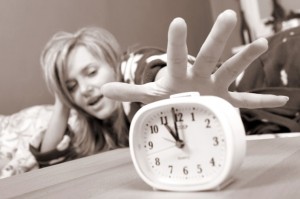
For most of us, alarm clocks buzz the same time every morning. The average grocery store stocks over 38,000 items; yet the standard shopper goes to the same store every week, usually on the same day, and chooses from the same few dozen items every outing. We become brand loyal, eating our meals at approximately the same period every day, leave for work at a uniform time, drive a standard route, and return home at a consistent hour every night. Evenings consist of consuming one of a few “favorite” dinners. Entertainment consists of books or magazines from a few select genres and a stable of favorite authors; or maybe a regular line-up of TV shows, which we watch while sitting in “our usual place,” and snacking — or not — on the same foods we had yesterday at the same time. At day’s end, we retire at the same time, even sleeping with the same person (hopefully), only to repeat these patterns come dawn.

This is not to suggest we are unimaginative, bland, nor boring; rather to illustrate that we are creatures of habit; no if’s, and’s, or butt’s about it.

Reality is these habits make life easier. Picture the above scenario where every single day consisted of an entirely new routine. Exciting? Sure — for a little while. After that, just plain exhausting.

The downside of a life assembled on a foundation of habits are the “side effects;” those unexpected results of our patterns. Make no mistake however; they are every bit as much a part of the habit as are the results we seek. For example, if I’m bored, I eat. If I’m angry, I eat. If I’m sad, I eat. It’s a common routine. It allows me to feel better fast. After all, chips or ice cream not only alleviate boredom, but also go a long way toward holding negative feelings at bay — for the short term. The side effect is a weight gain. I get to feel good quickly, for the simple price of obesity long term.

Conversely, some people read a book when bored; when sad, call a friend; and when angry, take a brisk walk. (There is a clinical term for such folks: “Skinny.”) Whereby their habits also provide comfort, the side effects are healthier. Should I long for such results, I must also develop similar habits.

The thing is that it’s extremely difficult to “drop” habits. Since their sole purpose is to fill voids, simply abolishing them make those holes more painful. This in turn, triggers the very behavior we were trying to banish — which puts our actions at odds with our feelings. In a case like that, emotions almost always win out and the habit — and its side effects — strengthens.

To break this cycle, one must replace the offending behavior with a counterproductive one. So, rather than saying, “I won’t eat when stressed,” develop a plan, such as, “I’ll take a walk when stressed.” Providing you don’t also grab a candy bar on the way out the door, the anxiety is still diminished — without the pesky side effect. Yes, feels awkward at first (because it’s not yet a habit), but given a few repetitions, it eventually forms a new, healthier, habit.

We never really get rid of habits. We put them in cold storage; we can thaw them out whenever we choose. Unfortunately we do that more times than we consciously choose, which is yet one more habit we can change.

Thursday, January 21, 2010

Why wait?

When I was a pup, a coveted “grown up treat” was staying up with my father to watch “Gunsmoke,” (the longest running weekly TV show in history; 655 episodes from 1955-1975 for trivia buffs).

The character of Festus Haggen, performed by Ken Curtis, was an unusual fellow, whose entire family may have possessed “fewer than 32 teeth among them,” as described by one reviewer. He was Illiterate, habitually incoherent, and fiercely loyal to Marshall Dillon, whom he considered one of his two best friends (the other was his mule). During one particularly grueling episode Festus exclaimed, “I wish it was Sunday so I could take a bath!”

Confused, I questioned my father, “Why can’t he take a bath today?”

“He only bathes on Sundays.”

“What if he gets dirty on Monday or Thursday?”

Replied my impatient father, “Do you want to watch the show or go to bed?” (Which was his not-so-subtle way of saying, “Be quiet.”)

As the world turns (no TV reference implied but I admit I’m pleased with utilizing the phrase), we arrive at yet another January, providing many an opportunity to put into action long delayed changes; saying, in effect, “I’m glad it’s the New Year so I can finally lose weight.”

I admire anyone beginning the punishing pathway to personal reconstruction; however, why the preoccupation with repeating a pattern every January first, only to give up like a nervous TV executive canceling a sitcom two weeks into its schedule? Yes, January makes sense; a new year is an excellent time to reaffirm direction for life’s coming chapter. Yet, it is merely another earthly revolution around its axis. Choose any of 365.

For example, Korean New Year, Hangul, is the first day of their lunar calendar, and the most important of the traditional Korean holidays, lasting three days. It usually occurs in February, providing a refreshed opportunity for resolve just as motivation and the hectic pace of the American holidays begin to wane. Why not start early February?

Or, what about Gudi Padwa, one of the most auspicious days of the Hindu year, believed to be the day that Lord Brahma created the world? In that culture, it is viewed as a time to wipe the slate clean and make a new start, arriving this year in April. Whether that allows us to delay our personal promises three months beyond January or have yet another opportunity to set them in motion is a function of one’s determination.

Should April slip past, Rosh Hashanah the beginning of Jewish New Year, is usually celebrated in September. The Chinese use a different time of year also. By setting one’s vows in the fall or spring, he or she could have a jump start on next year’s January rush. It might also be argued that since those two cultures have a combined 10,475 years on their calendars, compared to a little over 2000 for us, maybe autumn, rather than winter, is more apropos for change?

Selecting specific dates does not ensure the motivation for change will arrive per schedule. To rightly conquer one’s demons, experience the enthusiasm of new beginnings, and put to bed the regret of lost days, there is no time like this moment, right now. Should it pass, another opportunity immediately follows; no need to wait.

Thursday, May 07, 2009

I believe


I believe there is more to each of us than we could ever know.

I believe there is one Source connecting everything, everywhere, always. It sits not on high, separate, watching passively, as we meander through the parade of choices composing our lives’ stories. Instead it is inextricably intertwined within and around, nearer than our breath, no further than our thoughts.

I believe each and every thing we experience, feel, or think is born of that source. Every powerful spark of inspiration, tinge of emotion, or idea that will ever take shape is created of that place, centered deep within — and connecting — each of us. It is that innate connection we all share that has driven us from wanderers to farmers, thatched-leaf hut villages to expansive cities.

That force within us has guided us as we have fashioned astounding, spectacular, creations that can light the darkness, locate unseen ill-nesses, or further connect us: anywhere, anytime, with the tap of a SEND button. We hurl computerized, complex objects billions of miles across a darkened sky to land with pinpoint accuracy on far-flung worlds so distant that they are invisible to the naked eye — and would have remained unknown if not for others inspired to create by that exact same source we all share. We create because the Universe is in a constant state of creation. Being of it, we do the same.

We have founded treatments for afflictions and ailments from scurvy to smallpox, measles to polio. And someday, it is as sure as we exist that morning will dawn over a world devoid of cancer, AIDs, and Alzheimer’s. We know we will find cures; we are merely in the process of bridging the distance between inspiration and implementation.

When we believe, we do spectacular, astounding things — and will do far more. It is what we do because it is who we are.

Our greatness has names, some known to many: Mother Theresa, Albert Einstein, Miguel Hidalgo, Fa-Ngoum, Martin Luther King, Jesus, Mohammed, and Buddha. Some are lesser known: you, the store clerk, the daycare worker, and me. Yet, within each is the precise unchanging power that created all who have come before and who will ever be.

Since we are part of the universe, we must be infused with the same stuff that created our rivers, mountains, oceans, and even our Mother Earth. Moreover, beyond that, the same universal force that envelops each of us, at all times, wherever we are, wraps the furthest star in the darkest night. Therefore, when we gaze far into the nighttime sky, we see some of ourselves. We cannot be separated from that which created us; it is denial of what we are, and what we can be.

I believe all this. And because I do, I am convinced that a force so pow-erful, so creative, so expansive to do all this, would never put anyone on this planet doomed to fail, whether her goal may be to change the future of millions or simply to lead a happier life for herself.

I felt we needed to be reminded. I sure do.

Thursday, April 02, 2009

Reclaiming her life

In line at the coffee house, she stood leaning on her left leg to prop up the baby on her hip. He sucked noisily on a yellow pacifier, watching over mom's shoulder as people queued behind her, huge blue eyes with an intense open stare greeting each new patron. The canopied stroller was therefore empty of its occupant. An SUV of child carrying conveyances, it was constructed to withstand the impact of an army of toddlers. Currently however, it served as transport, loaded with an assortment of quilted belongings, stuffed toys, a cell phone, bottles of baby food, and several zip lock bags distended with a plethora of toasted oats, wafers, and carrots.

On the opposite side of her infant son was her three-year-old daughter; clinging fiercely to mommy's leg for protection, burying her young face in her mom's thigh whenever anyone made eye contact. From her small hand, dragging across the tile floor was a white, weary, worn blanket, emblazoned with a smiling penguin.

Mom was only 32. Yet with her long dark hair hastily hoisted above her head in an elastic band, a gray oversized sweatshirt with "UCLA" (and numerous drool stains) across the front, and faded, fraying black sweatpants, some days she felt as well worn as her attire.

She retained an attractive shape (albeit heavier from bearing two children), but could still "pretty up" quite nicely provided she had the time - or desire. She adored her husband; he was a kind, supportive, gentle man, who appreciated her for whom she was. Their financial situation required him to work long hours on the road, leaving her to attend to the house and the children. When he was in town, and the kids were finally in bed, and the maintenance of home chores at long last completed, romance ranked low compared to sleep. So neither of them spent as much time concerned about appearance as they had in earlier years.

Staying at home with her kids was vital, and she enjoyed it. It also provided her life with a value that working at the insurance company never could. Yet, everything bears a price. When you take care of everyone else, who takes care of you? The lack of self-attention was taking its toll and she felt it heavily.

She used to jog each morning; now she changed diapers, washed sheets, and prepared meals; always tasting while she cooked. In those all-too-fleeting, precious, rare moments of solitude, she escaped with a novel and a bag of chips. Every afternoon - just so she could get out - she scooped up the kids, walked to this place and ordered a cookie for them and a muffin for herself.

This afternoon, while the kids napped, she noticed her shape in the mirror and suddenly felt very old. In that instant came the spark of change. "Just take a step," she told herself. "Not everything, anything. It's a beginning."

When the clerk asked for her order, the whirlwind of thoughts collapsed into silence. She replied, "Juice, yogurt, non-fat milk, and a diet soda."

With that simple action, she felt alive again.

Wednesday, April 23, 2008

Now Boarding

It is more convenient to take a trip to a convention center to speak to 300 people than it is to cram them all in my living room. Therefore I spend a goodly share of time in airports. Although there are many kind and respectable people employed within, I often find myself irritated with the process of getting from where I am to where I wish to be, specifically the lines, security, and all-too-common delays.

This frustration - coupled with the need to arrive for my flight before even the sun is awake - causes me to not sleep well the night prior to my travels. Because I am paranoid about being late, I plan to rise at 4AM, which will provide enough time to clear security, check in, and stagger over to the local barrista so he can jump-start my heart with excessive doses of caffeine. To make sure I actually do rise at such an inhumane hour, I set an alarm clock, cell phone, and PDA. (Should all three blare at the same instant, I would probably suffer a heart attack from the unexpected cacophony and miss my flight anyway.)

Reality is alarms are unnecessary because I toss and turn through the night, afraid to oversleep. The internal insomniac conversation is akin to this:

2:00 AM: "I'm going to be so exhausted tomorrow. C'mon Scott, relax! Fall asleep NOW!"

2:30 AM: "OK, if I pass out this second, I can still get 90 minutes; I can get by on that."

3:00 AM: "I'll sleep on the plane and take a ten minute nap between presentations. Cats get by on short naps, why can't I?"

3:15 AM: "Sleep is over-rated. Maybe I should just get up. I'll drink lots of coffee."

3:30 AM: "Oh, forget it! What's the use? I might as well get moving."

With that thought, I drop my feet over edge of the bed and drag my exhausted body into the shower, hoping to revitalize myself enough to get to the airport before collapsing in the arms of Hypnos, the God of Sleep.

As I recently lie restlessly in the darkness, I thought, "At which point do I finally decide to face the inevitable, get up, and get moving?" I know how this is going to turn out; I might as well accept it. What causes me to finally cross that line? When do I shift from inactivity to realization to action? I squander so much time forcing myself into stagnation, knowing all the while the outcome is predestined. Denial and delay are not successful strategies.

This routine, I decided, is a metaphor for much of life. As frustration mounts and the inevitability of what needs to be done pushes ever closer, we find unlimited rationales to avoid doing what we'll eventually do anyway. "There's always later." "Problem, what problem?" "Ignore it and it will go away."

The alarm is blaring; the destination awaits; all seats are boarding. Check your baggage, it's time to go.

Wednesday, December 26, 2007

Embracing the Here and Meow

KC in a boxSomebody said, "Dogs have masters, cats have staff."

Being a staff member for two cats, I will testify to the veracity of the statement. Our 12-year-old cat, K.C. (um, short for "kitty cat"), has abruptly made a significant behavioral switch, leaving me in the position of having to adjust to this alteration - as I seem powerless in my attempts to convince her to revert to old behaviors. It appears that the bedroom where she has spent many years sleeping, purring - and shedding - is no longer acceptable to wile away the hours. Rather, she has commandeered our bathroom.

In addition to the fact that she has no need for such facilities, I find it puzzling, as tile and porcelain seem to be rather uncomfortable furnishings (especially compared with the warmth and comfort of a carpeted bedroom).

Yet, undeterred by my urgings to return to a softer habitat, she has taken over, napping in the tub or sleeping on the toilet lid. At first I was unnerved in the wee, dark, quiet hours of the night should I happen to sleepishly stagger into the bathroom and be greeted unexpectedly by a low, rumbling, noisy purr. Now, I have learned to simply lift her from the toilet seat, place her on the edge of the tub, take care of business, return her to the lid, pat her goodnight, and totter unsteadily back to bed. Shaving has become virtually impossible as she jumps onto the vanity and sticks her face in mine. We have developed a dance: I place her on the floor, shave as quickly as possible before she leaps back, replace her on floor, shave, floor, shave, repeat as necessary.

As with most change, I do eventually adjust.

This is just one aspect of life beyond my control. Should they all be as benign as modifying my morning constitutional to accommodate a furry, affectionate feline, life would be delightful. Yet, that is not so. Often, change crashes in, an out-of-control 18-wheeler through a tent, crushing and crunching everything in its wake; proof of the observation, "Life is what happens while we make other plans."

The question is not, "Will life change?" Instead, it is "How will I adjust to its changes?" Rather than dig in my heels to be dragged screamingly into the dark places, I can find some peace in accepting that the only constant is change. Lamenting a changing diet or the aging of my body does nothing more than tear down my attitude, depleting what I joy I could have.

Change is in all things: the blooming of spring flowers, the laugher of an infant, even the wrinkles around my eyes. It is neither "bad" nor "good," it merely "is."

Embrace it. Adjust to it. And, oh yes, take some time to purr.